Southwest Corridor
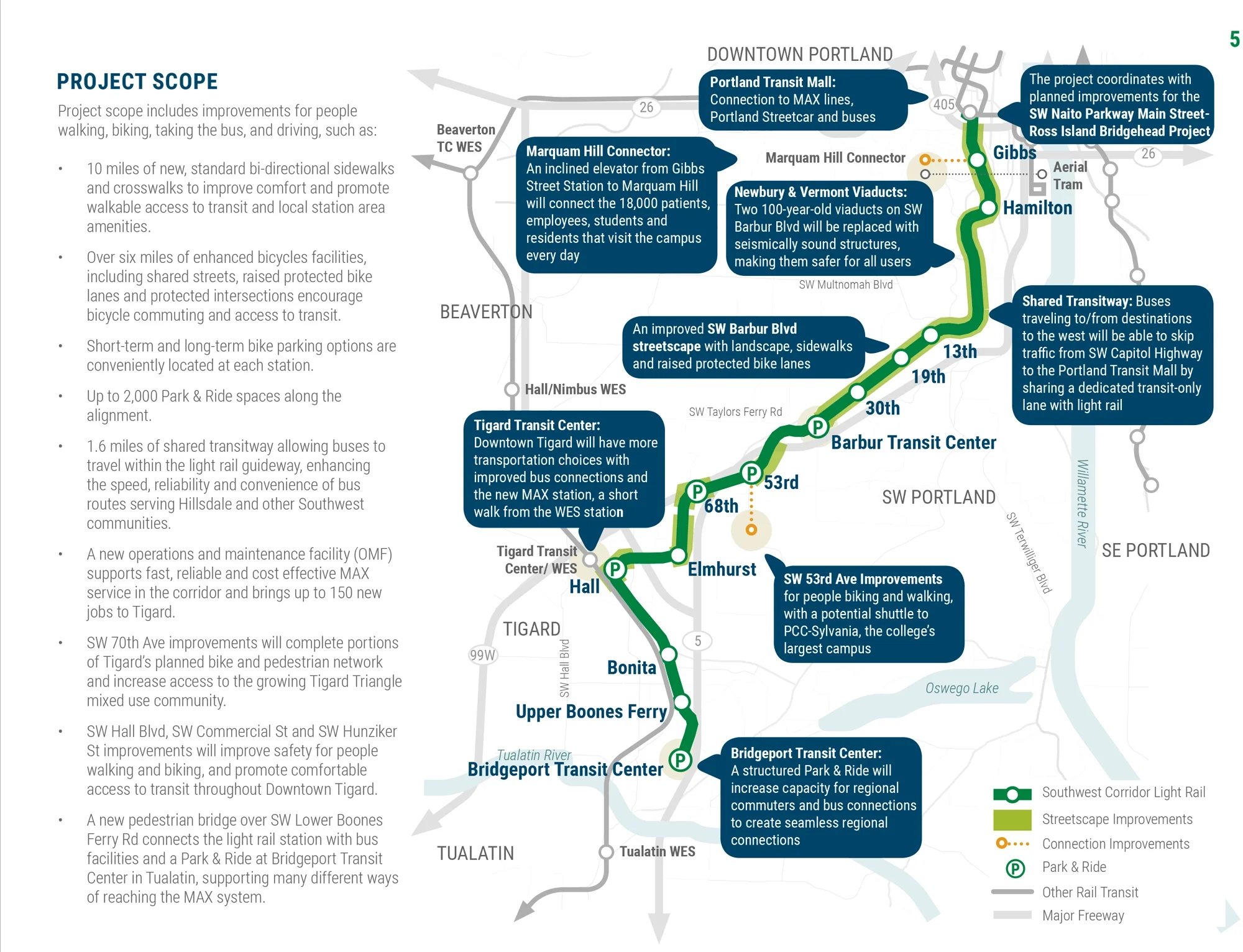
The Southwest Corridor Light Rail Project is a major regional initiative designed to extend Portland's MAX system by 12 miles, connecting downtown Portland to Tigard and Tualatin. While the project moved into a more gradual planning phase following a 2020 funding measure rejection, it remains a critical component of the region’s long-term Strategic Transit Vision, with planning and equitable development efforts continuing through 2026. The design strategy, developed as part of a joint venture, emphasizes "urban design integration," shifting the focus from simple transit infrastructure to the transformation of the SW Barbur Boulevard corridor into a high-performance, multi-modal thoroughfare.
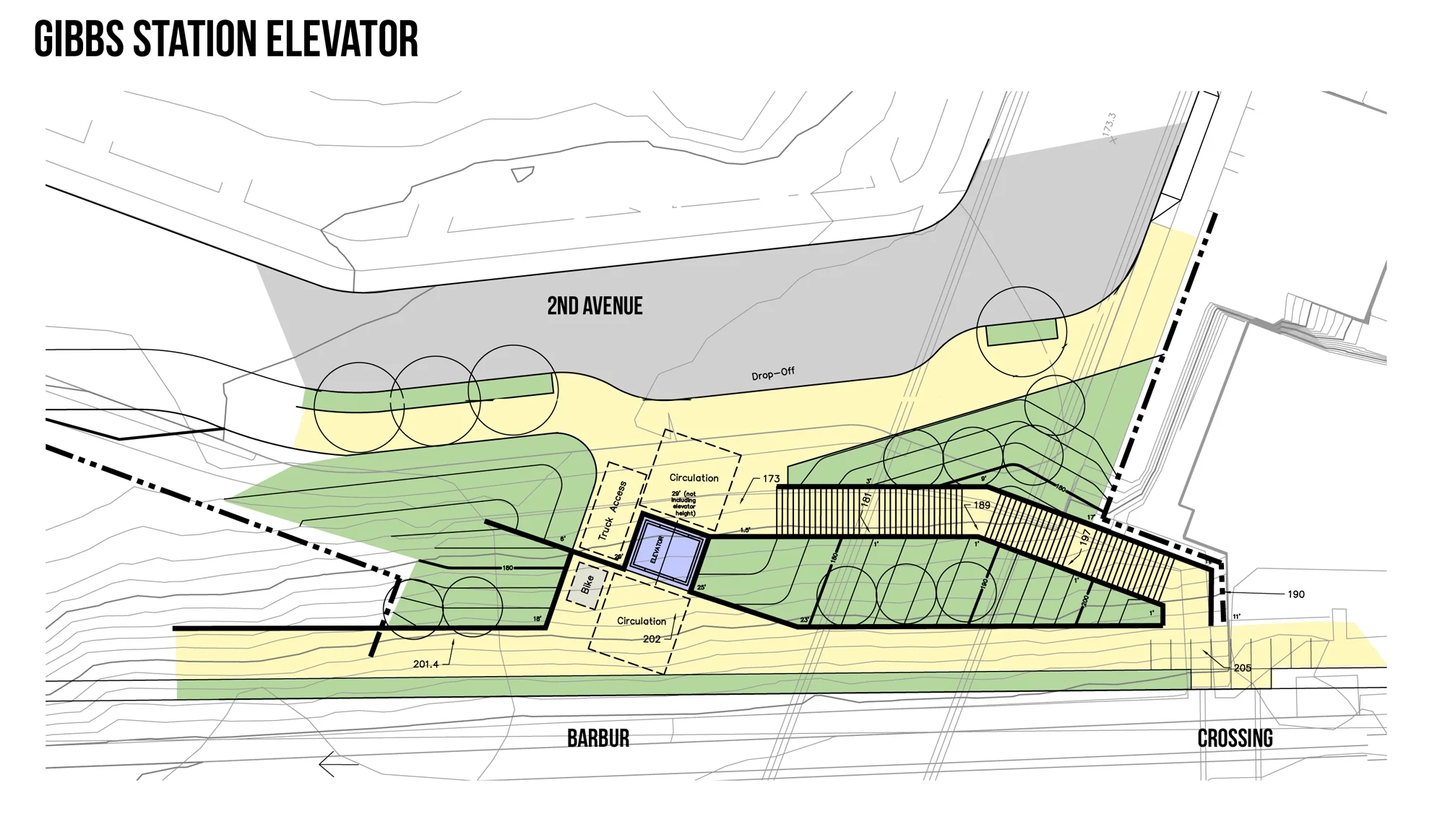
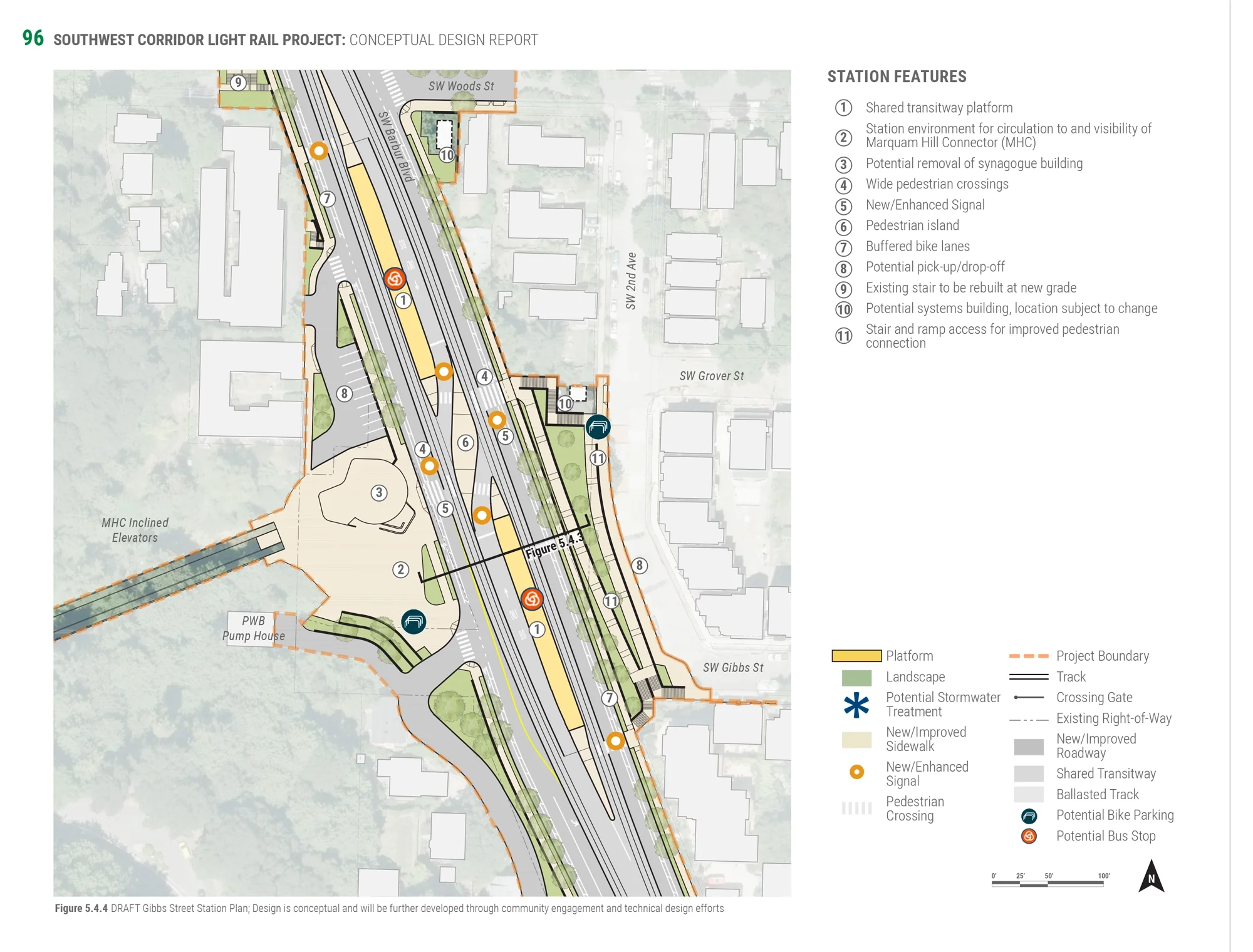
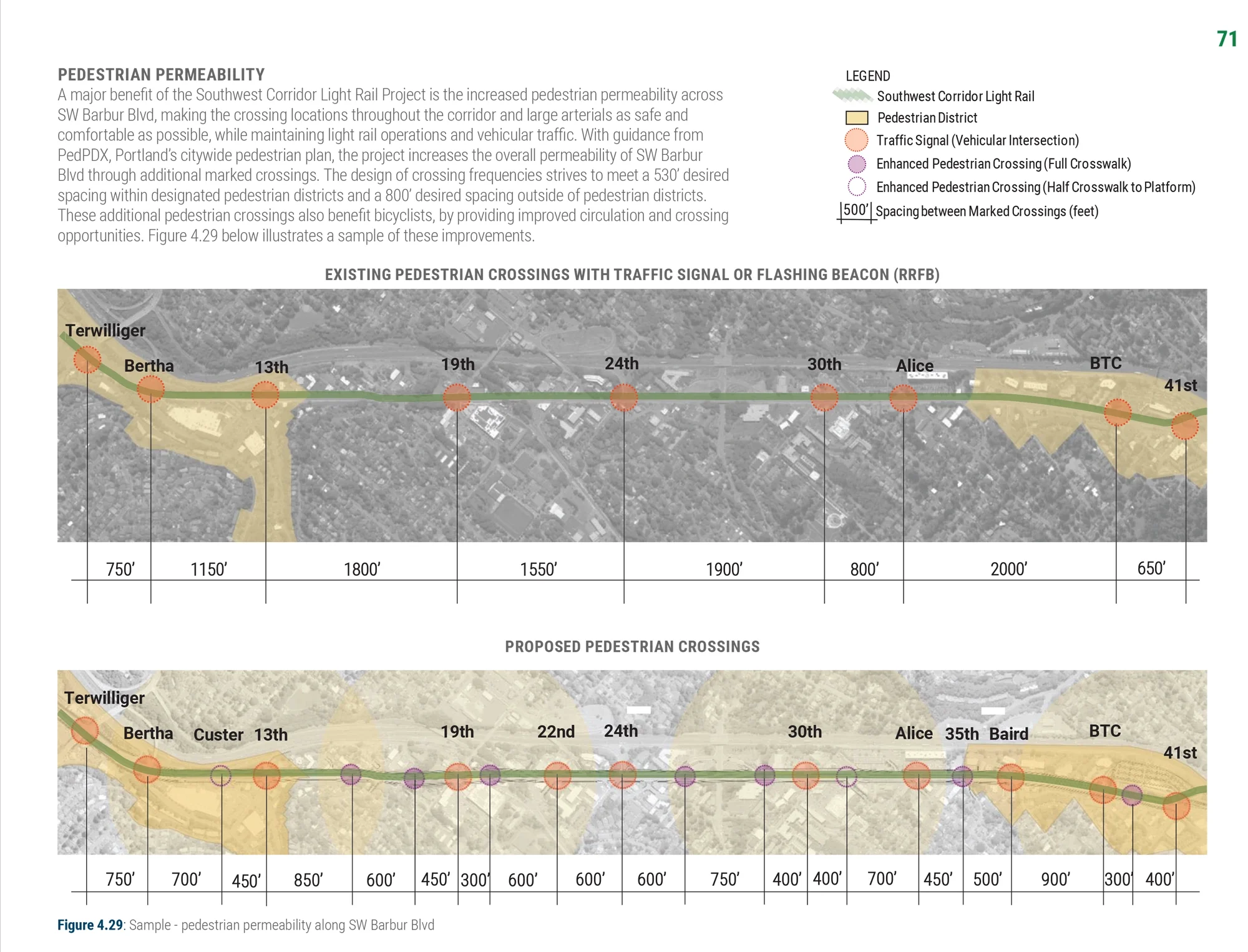
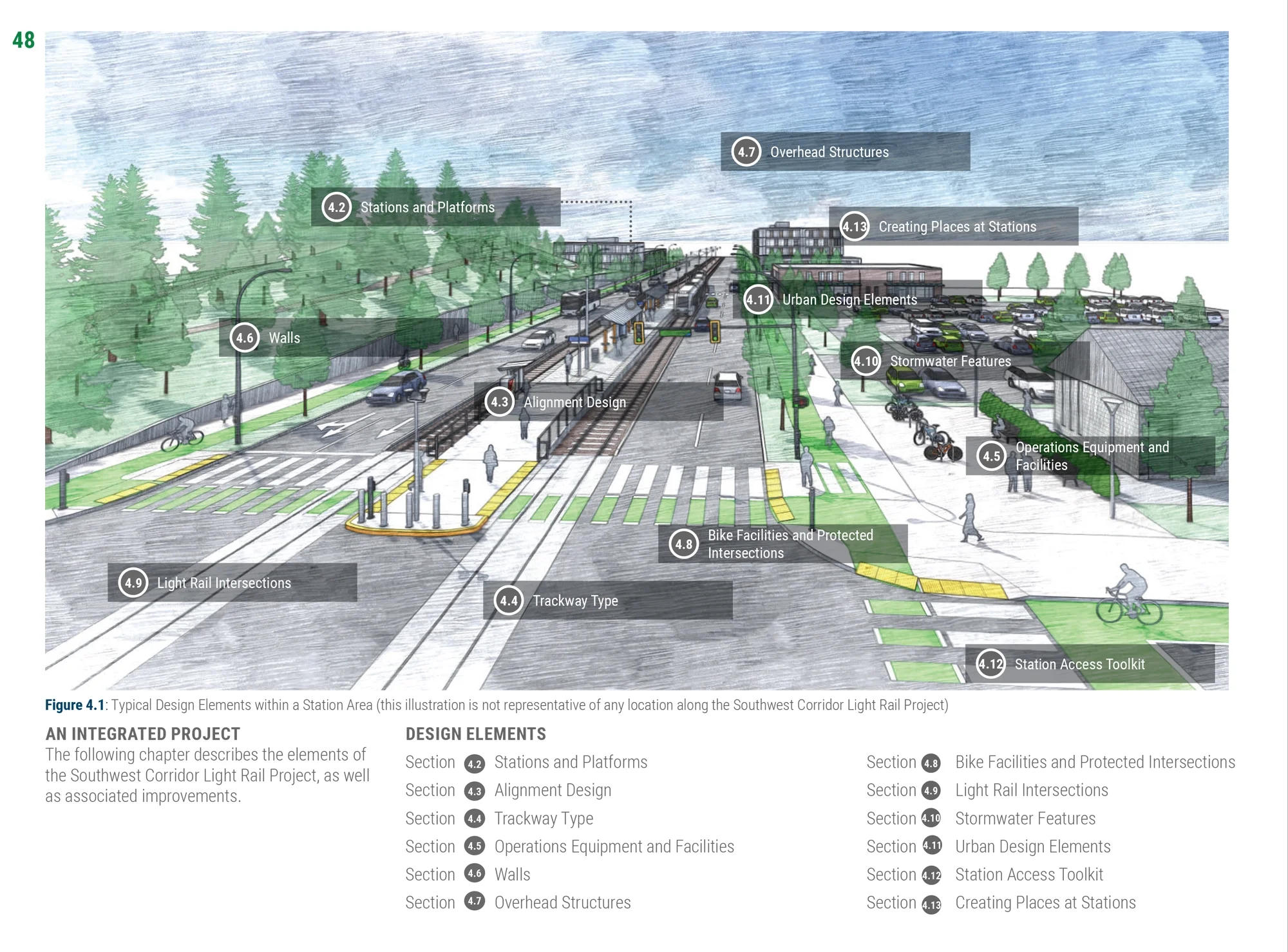
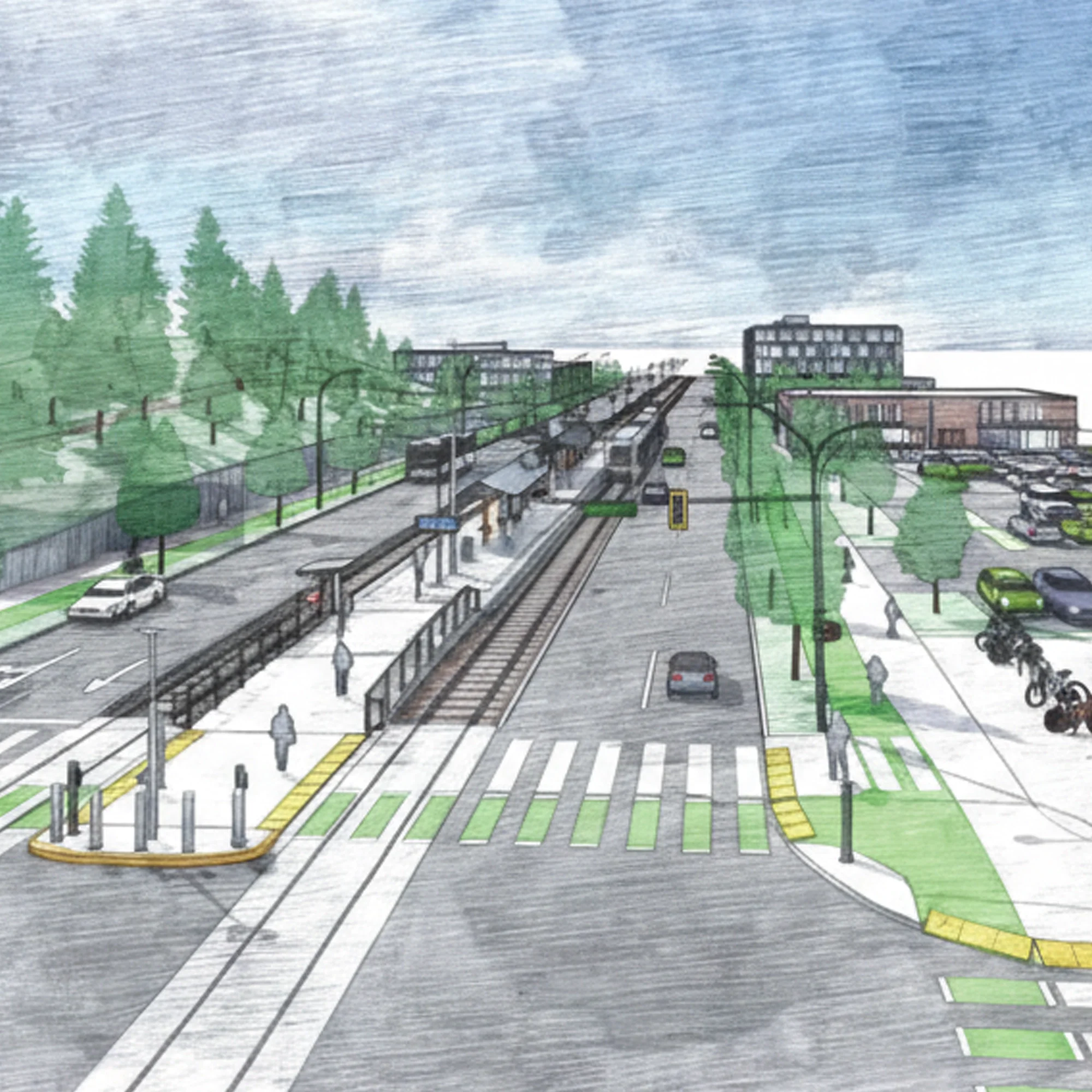
The plan includes the construction of 13 new stations, each functioning as a secure community hub featuring improved pedestrian crossings, protected bike lanes, and sustainable stormwater facilities. Our approach prioritizes "transit access" by designing intuitively connected pathways that link the new light rail system to major regional destinations, including OHSU on Marquam Hill and the PCC Sylvania campus. By balancing technical transit engineering with human-scale urbanism, the project aims to support the 75,000 new residents expected in the corridor by 2035 while utilizing a robust equitable housing strategy to prevent displacement and ensure long-term community resilience.
Client: TriMet and Metro
Team: Joint Venture - ZGF Architects, VIA Architecture, Mayer/Reed
Status: Completed with Mayer/Reed
Credits: Images courtesy of TriMet